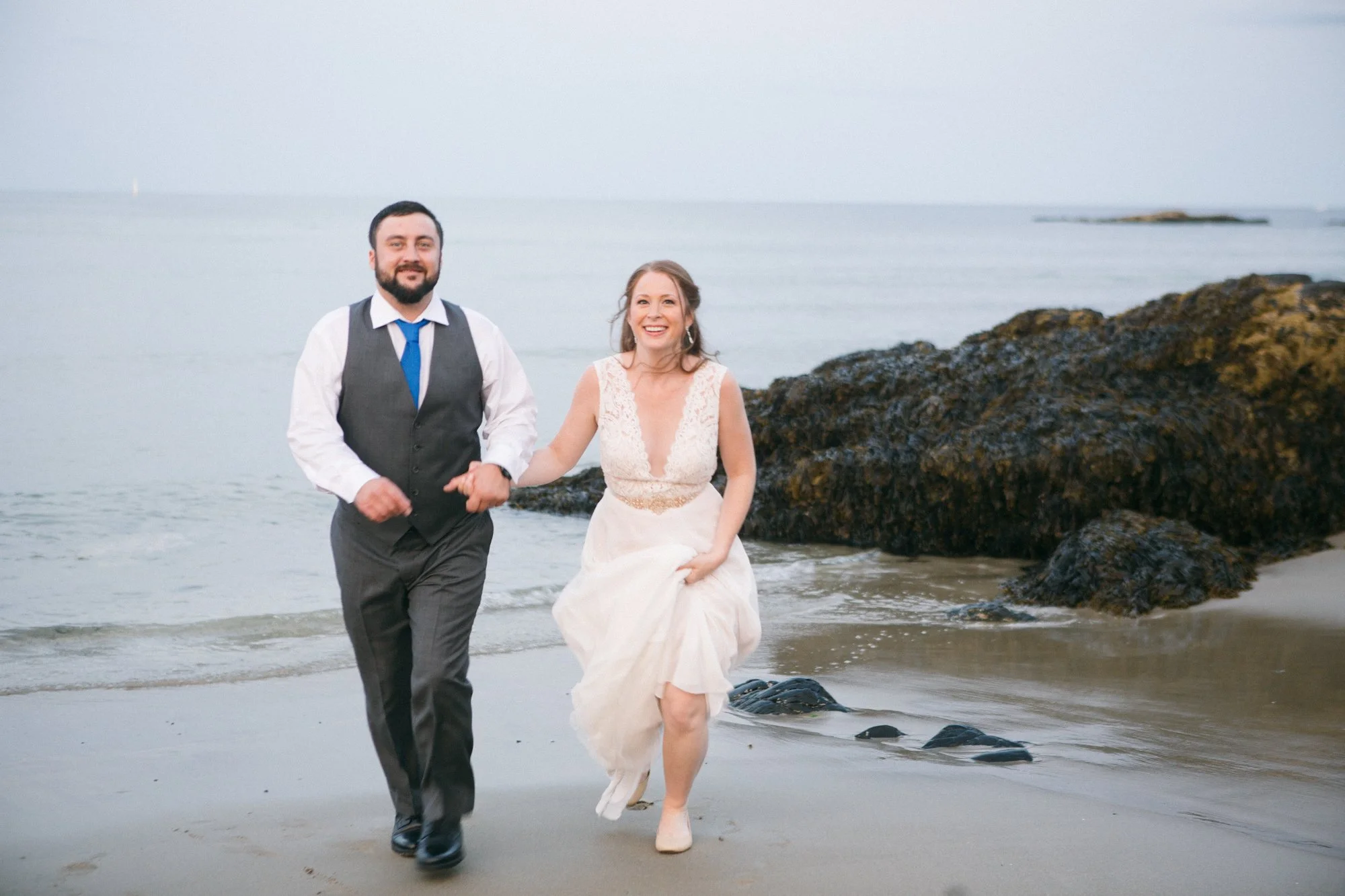
Why Great Cape Cod Wedding Photos Aren’t About the Camera
“Ninety-nine percent of lenses are better than 100 percent of photographers,” is a quote from wildlife photographer Scott Bourne that’s always stuck with me.
There’s a temptation in photography circles (that often gets pushed onto couples), to believe that better gear is all you need to make better photos. But in our day-to-day work when most photographers are stressing their gear, it’s usually because something in their technique or approach that’s lacking. So much of wedding photography is about training your eye to see in pictures, about anticipating the moment and making sure that you’re in the right place to capture it.
That’s not to say that gear doesn’t matter – there are a lot of important things that should go into a camera before it’s ready for a wedding. It needs to be at least a little bit rugged (and a little bit weather-resistant because sometimes you’re just going to have to step out in the rain), it should have two card slots in case of failure (because these images just happen once).
The rest of the specifications are mostly about creating some extra margin for error – I know I’ve benefitted from improvements in dynamic range over the years and expanded ranges for ISO have been a boon for creating moody night portraits. With more megapixels I have more freedom to crop and recompose an image later for prints or albums. It’s the same with postproduction, you can rescue something that’s on the margins, but technology isn’t a total replacement for talent. A good artist cares for their tools and selects equipment that will help them bring their vision to life.
But that’s not a substitute for the fundamentals. Every iconic photograph you can think of was taken with worse equipment than we have access to today (probably worse than what you’ve got in your pocket in some ways)! But they stand the test of time because of the vision and technique involved in capturing those moments. What makes a great photo is the emotion and skill used to capture it.
This is why when I give advice about interviewing wedding photographers, I generally don’t recommend centering equipment. Should they have good gear? Yes, but that’s the baseline. If the conversation keeps circling back to how much they paid for what’s in their bag, it’s a red flag. A great lens won’t help manage a timeline, work a dim reception room, or anticipate where the magic is going to happen on the dance floor.
When you look back at your photos in ten years, you won’t remember what camera they were taken on. You’ll care that you can feel that split second all over again. If you want to talk about what matters to you when it comes to your wedding photography, send me an email.
Ryan Richardson is a wedding and engagement photographer serving Boston and beyond; including Cape Cod Weddings, New England Weddings, Massachusetts Weddings and Rhode Island Weddings